BEGIN:VCALENDAR
VERSION:2.0
PRODID:-//jEvents 2.0 for Joomla//EN
CALSCALE:GREGORIAN
METHOD:PUBLISH
BEGIN:VEVENT
UID:cd02fa887b39f9cdf199a318da8a7ad2
CATEGORIES:North America
CREATED:20170801T155541
SUMMARY:West Texas: Big Bend & Davis Mountains with Edwards Plateau pre-tour
DESCRIPTION:Encompassing some 775,000 acres or approximately 1200 square miles, Big Ben
d National Park preserves an area where the United States border along the
Río Grande sweeps deep into Mexico. The Chisos Mountains stand sentinel 6,0
00 feet above the surrounding Chihuahuan Desert. In lush pockets of woodlan
d along its sculpted crest lies the only U.S. nesting habitat of the Colima
Warbler. Aside from the Colima Warbler, the high Chisos also afford refuge
for island populations of Zone-tailed Hawk, Blue-throated Hummingbird, Cor
dilleran Flycatcher, Painted Redstart, and Hepatic Tanager. An all-day hike
to Boot Spring can produce these and other Southwest species. Lucifer Humm
ingbird, Mexican Jay, Gray Vireo, Varied Bunting, and Black-chinned Sparrow
all occur in the foothills of the craggy Chisos. Other Tex-Mexican special
ties are more apt to appear in the islands of cottonwoods that flank the Rí
o Grande. Regularly-occurring riparian species we’ll search for here includ
e: Gray Hawk, Inca Dove, Elf Owl, Golden-fronted Woodpecker, Vermilion Flyc
atcher, Bell’s Vireo, Pyrrhuloxia, and both Orchard and Hooded Orioles. Alo
ng the 107-mile-long portion of the river that forms the Park boundary we’l
l visit both the Río Grande Village and the gorgeous Santa Elena Canyon—exc
ellent for Peregrine Falcon. Based at the cool, mile-high Chisos Basin Lodg
e, we’ll have four evenings to enjoy the deepening shadows slipping down th
e mountainsides from the outdoor deck of our comfortable accommodations. Bo
th birds and mammals such as Collared Peccary and the small, Sierra del Car
men subspecies of the Whitetail Deer are common in the Chisos Basin. Approx
imately the same elevation but far-better vegetated than the Chisos Mountai
ns, the scenic Davis Mountains afford us road access to shady stands of Sie
rra Madrean pine-oak woodland and Rocky Mountain Ponderosa pine. Famous as
probably the most reliable location for Montezuma Quail in the U.S., the Da
vis Mountains also shelter a diverse community of birds. Again this year we
will visit an area off-limits to the general public to look for a suite of
birds that are otherwise almost impossible to see elsewhere in Texas. Amon
g these are Buff-breasted Flycatcher, Mountain Chickadee, Grace's Warbler,
and wandering Red Crossbills. Our night in the Davis Mountains is at the be
autifully furnished and wonderfully comfortable historic Hotel Limpia. The
last afternoon will take us back across the Permian Basin, where we’ll chec
k a local reservoir for Western and Clark’s Grebes, as well as American Avo
cet and Cave Swallow. We’ll bookend this unforgettable trip to West Texas w
ith our first and final nights in Midland.\nOur Edwards Plateau pre-tour (M
ay 4-6, 2018) will take in the famous Texas Hill Country. A vast limestone
block of lovely rolling hills drained by well-wooded valleys, the Edwards P
lateau is a blending zone for Eastern and Western avifaunas. Visiting such
locations as Lost Maples State Natural Area we’ll have an excellent opportu
nity to record such east-west species counterparts as Ruby-throated and Bla
ck-chinned Hummingbirds, Carolina and Canyon Wrens, and Long-billed and Cur
ve-billed Thrashers. This is also the single best area in Texas for Black-c
apped Vireos and Golden-cheeked Warblers. Add Green Kingfishers patrolling
the crystalline streams and Cave Swallows spiraling out of the same crevice
s that shelter over 10 million Mexican Free-tailed Bats, and it is easy to
understand the magnetic pull of the Hill Country.\nLeader: John Yerger (ind
ex.php?option=com_content&view=article&id=29:john-yerger&catid=
18:leaders-and-staff&Itemid=155) \n (index.php?option=com_content&v
iew=article&id=23:rick-taylor&catid=18:leaders-and-staff&Itemid
=155)\nCost of West Texas: Big Bend & the Davis Mountains (May 6-13, 20
18) includes all transportation, lodging, meals, and entrances beginning an
d ending in Midland, Texas—$2395.\nCost of West Texas combined with Edwards
Plateau pre-tour (May 4-13, 2018), beginning in San Antonio and ending in
Midland, Texas —$3095. Note: most major airlines will book an arrival in S
an Antonio with departure from Midland for the same fare as a roundtrip tic
ket.\nPhoto: Casa Grande vista en route to Colima Warbler, Big Bend Nationa
l Park\nPhoto by: John Yerger\n (index.php?option=com_joomgallery&view=
category&catid=5&Itemid=197)\nView Photo Gallery (index.php?option=
com_joomgallery&view=category&catid=5&Itemid=197)
X-ALT-DESC;FMTTYPE=text/html: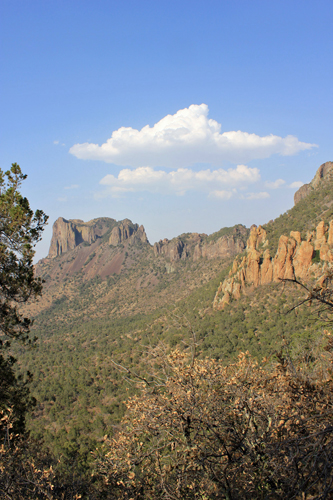 Encompassing
some 775,000 acres or approximately 1200 square miles, Big Bend National Pa
rk preserves an area where the United States border along the Río Grande sw
eeps deep into Mexico. The Chisos Mountains stand sentinel 6,000 feet above
the surrounding Chihuahuan Desert. In lush pockets of woodland along its s
culpted crest lies the only U.S. nesting habitat of the Colima Warbler. Asi
de from the Colima Warbler, the high Chisos also afford refuge for island p
opulations of Zone-tailed Hawk, Blue-throated Hummingbird, Cordilleran Flyc
atcher, Painted Redstart, and Hepatic Tanager. An all-day hike to Boot Spri
ng can produce these and other Southwest species. Lucifer Hummingbird, Mexi
can Jay, Gray Vireo, Varied Bunting, and Black-chinned Sparrow all occur in
the foothills of the craggy Chisos. Other Tex-Mexican specialties are more
apt to appear in the islands of cottonwoods that flank the Río Grande. Reg
ularly-occurring riparian species we’ll search for here include: Gray Hawk,
Inca Dove, Elf Owl, Golden-fronted Woodpecker, Vermilion Flycatcher, Bell’
s Vireo, Pyrrhuloxia, and both Orchard and Hooded Orioles. Along the 107-mi
le-long portion of the river that forms the Park boundary we’ll visit both
the Río Grande Village and the gorgeous Santa Elena Canyon—excellent for Pe
regrine Falcon. Based at the cool, mile-high Chisos Basin Lodge, we’ll have
four evenings to enjoy the deepening shadows slipping down the mountainsid
es from the outdoor deck of our comfortable accommodations. Both birds and
mammals such as Collared Peccary and the small, Sierra del Carmen subspecie
s of the Whitetail Deer are common in the Chisos Basin. Approximately the s
ame elevation but far-better vegetated than the Chisos Mountains, the sceni
c Davis Mountains afford us road access to shady stands of Sierra Madrean p
ine-oak woodland and Rocky Mountain Ponderosa pine. Famous as probably the
most reliable location for Montezuma Quail in the U.S., the Davis Mountains
also shelter a diverse community of birds. Again this year we will visit a
n area off-limits to the general public to look for a suite of birds that a
re otherwise almost impossible to see elsewhere in Texas. Among these are B
uff-breasted Flycatcher, Mountain Chickadee, Grace's Warbler, and wandering
Red Crossbills. Our night in the Davis Mountains is at the beautifully fur
nished and wonderfully comfortable historic Hotel Limpia. The last afternoo
n will take us back across the Permian Basin, where we’ll check a local res
ervoir for Western and Clark’s Grebes, as well as American Avocet and Cave
Swallow. We’ll bookend this unforgettable trip to West Texas with our first
and final nights in Midland.
Encompassing
some 775,000 acres or approximately 1200 square miles, Big Bend National Pa
rk preserves an area where the United States border along the Río Grande sw
eeps deep into Mexico. The Chisos Mountains stand sentinel 6,000 feet above
the surrounding Chihuahuan Desert. In lush pockets of woodland along its s
culpted crest lies the only U.S. nesting habitat of the Colima Warbler. Asi
de from the Colima Warbler, the high Chisos also afford refuge for island p
opulations of Zone-tailed Hawk, Blue-throated Hummingbird, Cordilleran Flyc
atcher, Painted Redstart, and Hepatic Tanager. An all-day hike to Boot Spri
ng can produce these and other Southwest species. Lucifer Hummingbird, Mexi
can Jay, Gray Vireo, Varied Bunting, and Black-chinned Sparrow all occur in
the foothills of the craggy Chisos. Other Tex-Mexican specialties are more
apt to appear in the islands of cottonwoods that flank the Río Grande. Reg
ularly-occurring riparian species we’ll search for here include: Gray Hawk,
Inca Dove, Elf Owl, Golden-fronted Woodpecker, Vermilion Flycatcher, Bell’
s Vireo, Pyrrhuloxia, and both Orchard and Hooded Orioles. Along the 107-mi
le-long portion of the river that forms the Park boundary we’ll visit both
the Río Grande Village and the gorgeous Santa Elena Canyon—excellent for Pe
regrine Falcon. Based at the cool, mile-high Chisos Basin Lodge, we’ll have
four evenings to enjoy the deepening shadows slipping down the mountainsid
es from the outdoor deck of our comfortable accommodations. Both birds and
mammals such as Collared Peccary and the small, Sierra del Carmen subspecie
s of the Whitetail Deer are common in the Chisos Basin. Approximately the s
ame elevation but far-better vegetated than the Chisos Mountains, the sceni
c Davis Mountains afford us road access to shady stands of Sierra Madrean p
ine-oak woodland and Rocky Mountain Ponderosa pine. Famous as probably the
most reliable location for Montezuma Quail in the U.S., the Davis Mountains
also shelter a diverse community of birds. Again this year we will visit a
n area off-limits to the general public to look for a suite of birds that a
re otherwise almost impossible to see elsewhere in Texas. Among these are B
uff-breasted Flycatcher, Mountain Chickadee, Grace's Warbler, and wandering
Red Crossbills. Our night in the Davis Mountains is at the beautifully fur
nished and wonderfully comfortable historic Hotel Limpia. The last afternoo
n will take us back across the Permian Basin, where we’ll check a local res
ervoir for Western and Clark’s Grebes, as well as American Avocet and Cave
Swallow. We’ll bookend this unforgettable trip to West Texas with our first
and final nights in Midland.
Our Edwards Plateau pre-tour (May 4-6, 2018) will take in the famous Texas Hill Country. A v
ast limestone block of lovely rolling hills drained by well-wooded valleys,
the Edwards Plateau is a blending zone for Eastern and Western avifaunas.
Visiting such locations as Lost Maples State Natural Area we’ll have an exc
ellent opportunity to record such east-west species counterparts as Ruby-th
roated and Black-chinned Hummingbirds, Carolina and Canyon Wrens, and Long-
billed and Curve-billed Thrashers. This is also the single best area in Tex
as for Black-capped Vireos and Golden-cheeked Warblers. Add Green Kingfishe
rs patrolling the crystalline streams and Cave Swallows spiraling out of th
e same crevices that shelter over 10 million Mexican Free-tailed Bats, and
it is easy to understand the magnetic pull of the Hill Country.
Leader: John Yerger
;
Cost of West Texas: Big Bend & the Da
vis Mountains (May 6-13, 2018) includes all transportation, l
odging, meals, and entrances beginning and ending in Midland, Texas—$2395.
Cost of
West Texas combined with Edwards Plateau pre-tour&nbs
p;(May 4-13, 201
8), beginning in San Antonio and ending in Midland, Texas —$3095.
; Note: most major airlines will book an arrival in San Antonio with de
parture from Midland for the same fare as a roundtrip ticket.
Photo:
Casa Grande vista en route to Colima Warbler, Big Be
nd National Park
Photo by: John Yerger

DTSTAMP:20260411T081646
DTSTART;TZID=America/Phoenix;VALUE=DATE:20180506
DTEND;TZID=America/Phoenix;VALUE=DATE:20180514
SEQUENCE:0
TRANSP:OPAQUE
END:VEVENT
END:VCALENDAR